Today's date is: September 19, 2026
Genesis Chapter 17
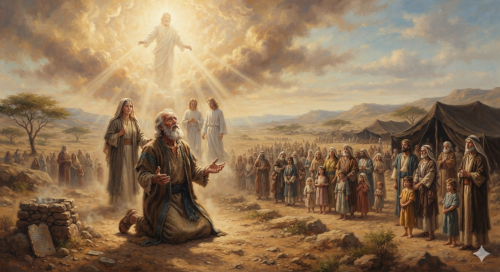
Genesis Chapter 17 details the pivotal moment when God reaffirms and seals His everlasting covenant with the 99-year-old patriarch Abram, renaming him Abraham and introducing circumcision as the permanent physical sign of their agreement.
The chapter transitions the covenant from a spoken promise into a formalized, multi-generational institution wrapped in symbolic name changes and concrete commands.
Genesis Chapter 17 marks a crucial theological turning point in the Book of Genesis, where God formally reaffirms, clarifies, and seals His covenant with the elderly patriarch.
Structural and Thematic Breakdown
- I. Divine Self-Revelation (v. 1-2) ─────── "I am El Shaddai..."
- II. Identity & Name Changes (v. 3-8, 15-16) ─ Abram ➔ Abraham; Sarai ➔ Sarah
- III. The Sign of Circumcision (v. 9-14) ── The physical seal of the covenant
- IV. The Promise of Isaac & Obedience (v. 17-27) ─ Laughter transformed into action
1. The Revelation of El Shaddai (Verses 1–2)
When Abram reaches 99 years old, Yahweh breaks a 13-year period of silence.
God introduces Himself using a new title: El Shaddai (commonly translated as God Almighty or "The All-Sufficient One").
- The Command:
God instructs him to "walk before me and be blameless".In Hebrew, tamim (blameless) does not mean flawless sinlessness; rather, it denotes wholehearted loyalty, integrity, and single-minded devotion.
- The Timing:
God intentionally waits until Abraham and Sarah are biologically incapable of having children so that the fulfillment of the promise is explicitly recognized as a supernatural act of divine power, rather than human capability.
2. The Transformation of Identity (Verses 3–8, 15–16)
| Original Name | Meaning | New Name | Meaning | Theological Significance |
|---|---|---|---|---|
| Abram | Exalted Father | Abraham | Father of a Multitude / Nations | Shifts his legacy from a localized family patriarch to the progenitor of global lineages and royal dynasties. |
| Sarai | My Princess | Sarah | Princess | Reflects her shared status in the covenant. She is explicitly named as the mother of the future line of monarchs. |
| God expands the geographical and relational terms of the agreement, promising the entire land of Canaan as an everlasting possession and vowing to uniquely be their God. | ||||
3. The Seal of the Covenant: Circumcision (Verses 9–14)
Every biblical covenant requires an accompanying visible token (like the rainbow in Noah's covenant).
God establishes circumcision (b'rit milah) as the permanent physical sign of this agreement.
- The Mandate:
Every male within Abraham's household must be circumcised on the eighth day after birth.This mandate explicitly includes biological children, household servants, and foreigners bought as property.
- The Penalty:
Any male who is not circumcised is considered a "covenant breaker" and must be "cut off" from the community, completely forfeiting the spiritual and tribal protections of the community.
- The Meaning:
Positioned on the organ of procreation, circumcision serves as a permanent physical reminder that the multiplication of their household depends entirely on God's sovereign hand, rather than natural human strength.
4. The Separation of Isaac and Ishmael (Verses 17–22)
When God announces that 90-year-old Sarah will personally conceive and give birth to the true heir within a year, Abraham falls on his face and laughs in disbelief.
- Abraham's Plea:
Out of paternal affection, Abraham begs, "If only Ishmael might live under your blessing!"
- God's Distinction:
God hears the plea and promises to bless Ishmael, declaring he will father 12 princes and become a great nation.However, God draws a firm theological boundary: the structural, spiritual covenant line will pass exclusively through Isaac (a name meaning "he laughs", permanently memorializing Abraham's initial reaction).
5. Prompt and Complete Obedience (Verses 23–27)
The chapter concludes with a powerful demonstration of faith through direct action.
On that very same day, 99-year-old Abraham executes the painful procedure on himself, his 13-year-old son Ishmael, and every male member of his sprawling household.
This swift execution underscores Abraham's total submission to the authority of El Shaddai.
Theological and Literary Impact
- Grace Prior to Expectation:
God reveals His identity (El Shaddai) and guarantees His promises before introducing the physical requirement of circumcision.The sign is an external response to a relationship already established by divine grace.
- Inclusion of the Marginalized:
The explicit mandate to circumcise non-biological servants and foreign-born workers demonstrates that God's covenant structure intended to incorporate outsiders into the spiritual community from its inception.
- Bridging Textual Milestones:
This passage effectively bridges the localized family dynamic of the early Genesis narratives with the broader national realities of the coming Exodus.It establishes the foundational physical identity marker that will define the Israelite nation throughout the rest of the biblical text.