Today's date is: September 19, 2026
Genesis Chapter 11
📝Summary
Genesis chapter 11 covers the Tower of Babel narrative, the subsequent dispersal of humanity, and the genealogical line leading from Shem to Abram.
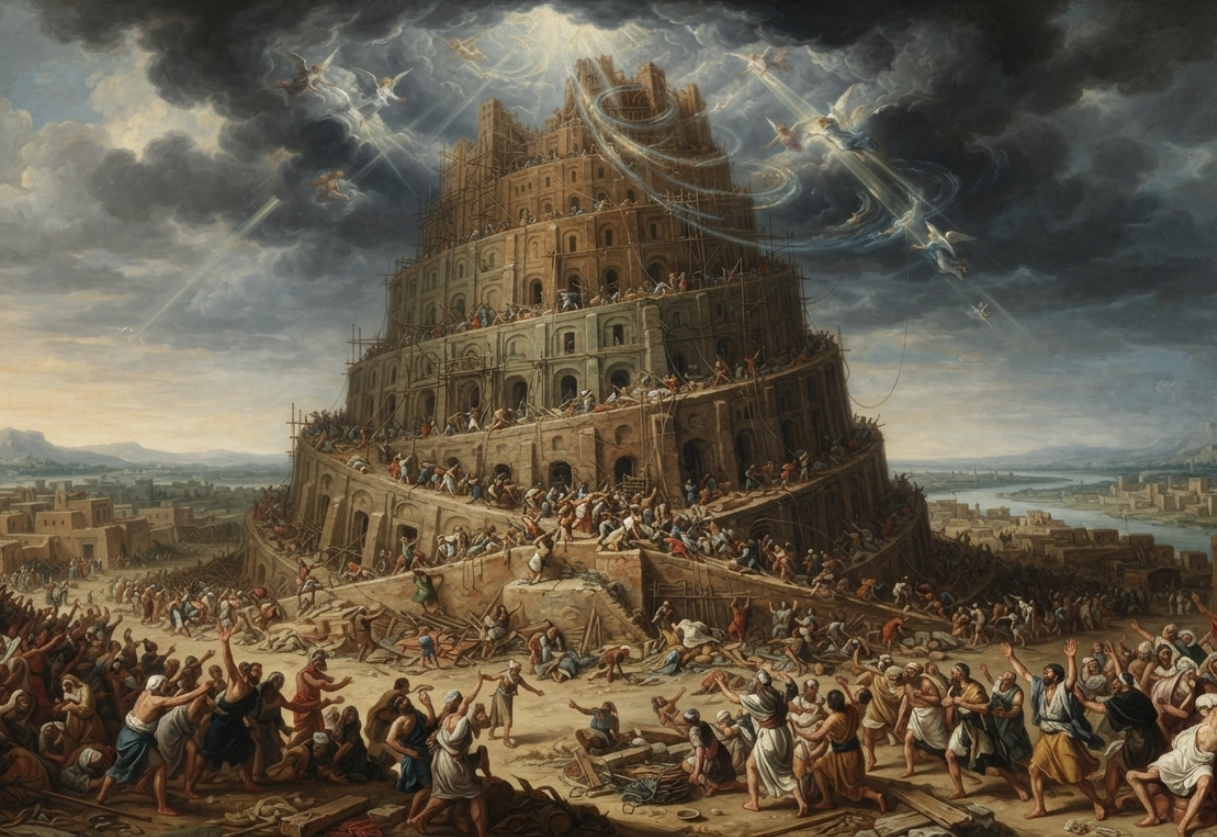
Genesis Chapter 11 recounts the Tower of Babel narrative and the genealogy from Shem to Abram, highlighting human ambition, divine intervention, and the preparation for God’s covenant with Abraham.
The Tower of Babel (Verses 1–9)
Genesis 11 begins with humanity speaking a single language, symbolizing unity and collective potential. The people migrated eastward and settled in the plain of Shinar, where they decided to build a city and a tower “whose top is in the heavens” to make a name for themselves and avoid being scattered.
This construction demonstrates both technological ingenuity—using baked bricks and asphalt—and human pride, as it defied God’s command to fill the earth (Genesis 9:1) and reflected a desire for self-sufficiency and security against future calamities.
God intervened by confusing their language, causing the people to stop building the city and scatter across the earth. This act illustrates divine sovereignty, showing that human ambition cannot override God’s will, and it explains the origin of linguistic and cultural diversity.
The story serves as a cautionary tale about pride, disobedience, and the limits of human achievement without God’s guidance.
Genealogy from Shem to Abram (Verses 10–32)
The second section of Genesis 11 provides a genealogical record tracing the descendants of Shem to Abram (Abraham). This genealogy links the post-Flood world to God’s covenant plan, emphasizing continuity in God’s providence and preparing the narrative for the call of Abraham.
It highlights key figures such as Terah, whose journey from Ur to Haran demonstrates themes of obedience, faith, and divine timing.
The genealogical details also underscore the faithfulness of God across generations, even amid human failures.
Themes and Lessons
- Human Ambition vs. Divine Authority:
The Tower of Babel illustrates the tension between human pride and God’s sovereignty, emphasizing humility and obedience.
- Unity and Diversity:
The initial linguistic unity allowed collaboration, but God’s intervention introduced diversity, shaping the cultural and linguistic landscape of humanity.
- Preparation for God’s Covenant:
The genealogy connects the Flood narrative to Abraham, showing God’s ongoing plan to establish a chosen people.
- Technological and Moral Insight:
The use of bricks and tar reflects human innovation, while the narrative warns against using knowledge for self-glorification rather than divine purposes.
- Faith and Providence:
Terah’s journey and the lineage to Abraham highlight God’s providential guidance, even when human plans are interrupted or redirected.
Conclusion
Genesis Chapter 11 is pivotal in the biblical narrative, combining a historical-theological account of human ambition with a genealogical bridge to Abraham. It teaches lessons about pride, obedience, divine intervention, and the unfolding of God’s plan, making it essential for understanding both human nature and God’s providence in Scripture. The chapter encourages readers to reflect on humility, faith, and the proper use of human ingenuity in alignment with God’s will.